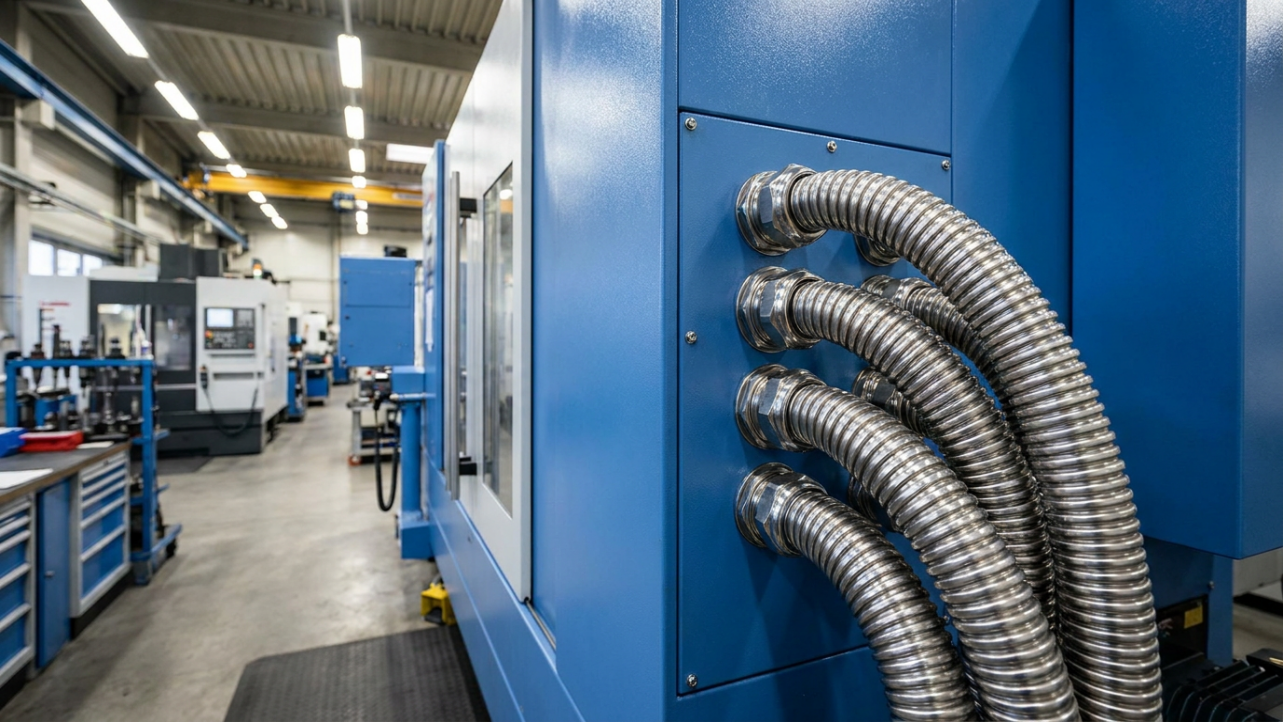
Hoonsun metal hose cable glands connecting corrugated metal conduit to a CNC machine tool enclosure, providing mechanical cable protection.
In a CNC machining center or industrial robot cell, cable management is never static. Moving axes, coolant spray, swarf, and constant vibration create a punishing environment where unprotected cables fail rapidly. Flexible metal conduit — protected at its enclosure entry by a metal hose cable gland — is the industry-standard solution for machine tool wiring protection. Yet many procurement engineers underestimate the engineering precision required to make these seemingly simple fittings perform reliably across millions of machine cycles.
This guide covers everything a technical buyer or machine builder needs to know about specifying metal hose cable glands: conduit standards, gland construction, thread matching, IP ratings, and the installation details that determine whether the assembly holds up for the life of the machine. Hoonsun supplies metal hose cable glands to machine tool OEMs and panel builders across Europe, Asia, and the Americas.
Metal hose cable glands are designed to terminate specific conduit constructions. Matching the gland to the conduit type is essential for IP rating and mechanical protection:
Metal conduit is sized to the nominal trade size or metric OD. Common standards: metric DIN (12mm–54mm OD), imperial trade size (⅜" to 4"), and Japanese JIS (P10–P42). Always specify both conduit OD and the enclosure entry thread standard (M-metric, PG, NPT) when ordering glands to avoid mismatch — the leading cause of field returns.
|
Gland Type |
Conduit Type |
IP Rating |
Typical Application |
|
ILM Connector (no jacket) |
Bare interlock steel |
IP40 |
Dry indoor CNC, cable tray exits |
|
Liquid-tight Gland (PVC jacket) |
PVC-jacketed LTMC |
IP54–IP66 |
CNC coolant zones, outdoor panels |
|
SS Liquid-tight Gland |
SS braid conduit |
IP66 |
Food processing, chemical plants |
|
Nylon Grip Connector |
Nylon flexible conduit |
IP54 |
Light automation, control panels |
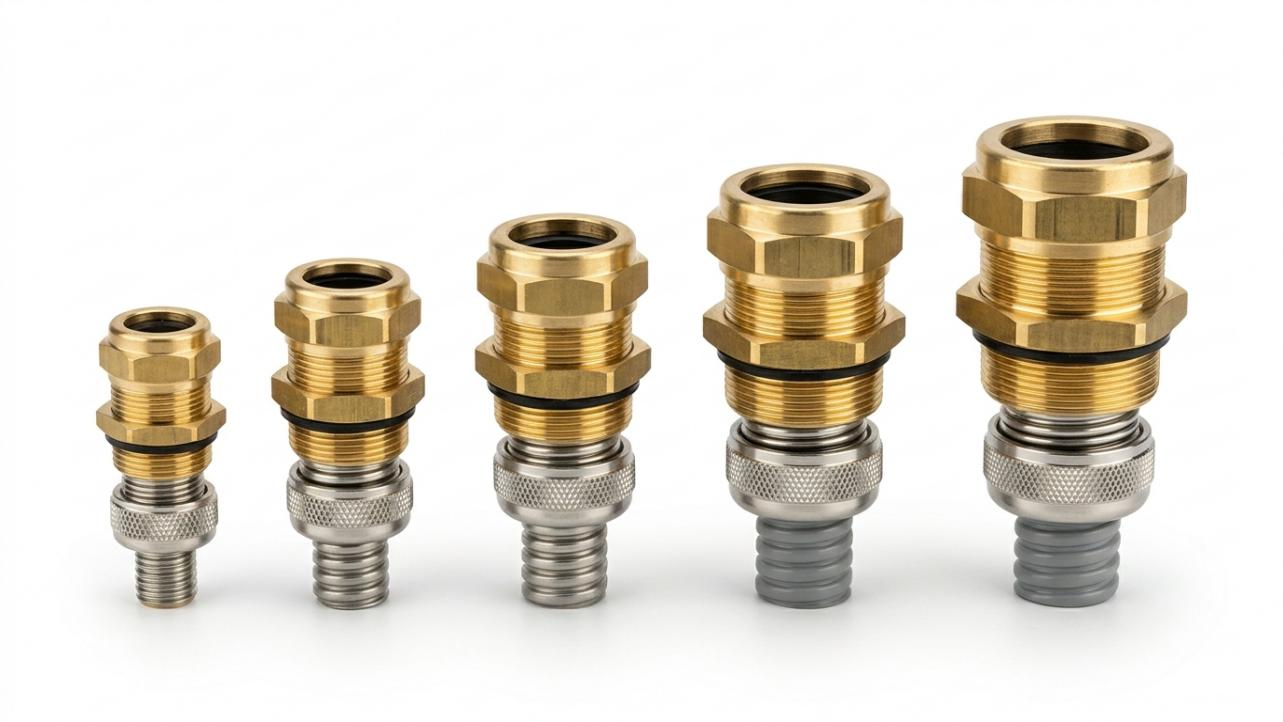
Hoonsun brass metal hose cable glands in M16–M50 sizes, with and without PVC jacket grip — standard production for CNC and automation OEM orders.
The entry thread of the metal hose gland must match the enclosure knockout or threaded entry exactly. Mismatching thread standards is the most common cause of installation failure and IP rating loss:
Hoonsun supplies metal hose cable glands in all four thread standards. Specify the thread standard and size on your RFQ to avoid supply mismatch.
|
🚀 Ready to Source? Get a Verified OEM Quote Within 24 Hours Send us your cable OD range, thread standard, IP rating, certifications required, and target quantity. Hoonsun engineers will reply with a spec-matched product recommendation and FOB price within one business day. 📧 Email: [email protected] 📱 WhatsApp: +86 189 6880 9169 🌐 Website: www.hoonsuncg.com | chinahongxiang.en.alibaba.com |
 Hot News
2026-11-20
2026-11-17
2026-11-11
2026-11-02
2026-10-28
2026-10-22

Copyright © Zhejiang Hongxiang Connector Co., Ltd. All Rights Reserved - Privacy Policy
 EN