In industrial sectors such as oil and gas, petrochemicals, mining, and even large-scale food processing, the risk of explosion is a constant operational reality. A single spark in an atmosphere filled with flammable gases, vapors, or combustible dust can lead to catastrophic consequences. Cable glands, though small, play a critical role in these "Hazardous Areas" by ensuring that the electrical entry points into explosion-proof enclosures do not become a source of ignition. For B2B procurement professionals and safety engineers, the terms "ATEX" and "IECEx" are ubiquitous, yet often misunderstood. Navigating these two certification systems is essential for ensuring global regulatory compliance and, more importantly, the safety of personnel and assets. This guide provides a comprehensive comparison of ATEX and IECEx certifications for cable glands, drawing on the 18+ years of manufacturing expertise of Hoonsun (Zhejiang Hongxiang Connector Co., Ltd.).
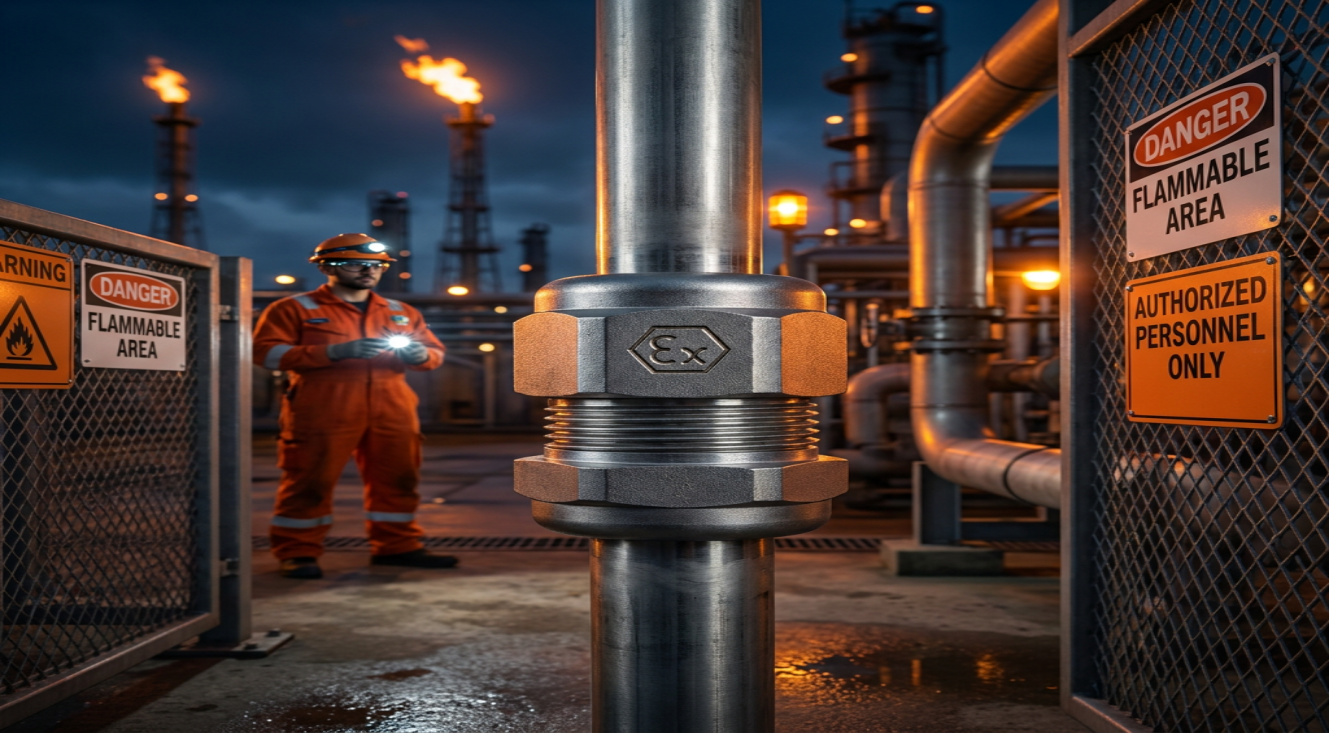
Before diving into certifications, one must understand the environment where the equipment will be used. Hazardous areas are classified into "Zones" based on the frequency and duration of the occurrence of an explosive atmosphere. For gases, vapors, and mists, Zone 0 represents an area where an explosive mixture is present continuously or for long periods. Zone 1 is an area where an explosive atmosphere is likely to occur in normal operation, and Zone 2 is where it is not likely to occur, or only for a short period. Similar classifications exist for dust (Zones 20, 21, and 22).
Cable glands are typically used in Zone 1 and Zone 2 environments. The requirements for Zone 1 are significantly more stringent, often requiring "Flameproof" (Ex d) or "Increased Safety" (Ex e) protection methods. A cable gland must be specifically tested and certified to maintain the integrity of the enclosure it is attached to. Hoonsun’s explosion-proof series is engineered to meet these rigorous zonation requirements, providing a secure seal that prevents internal explosions from spreading to the external atmosphere. Understanding your site’s zonation is the first step in the procurement process.
ATEX is derived from the French "Appareils destinés à être utilisés en ATmosphères EXplosibles." It refers to two European Union directives: Directive 2014/34/EU (covering equipment manufacturers) and Directive 1999/92/EC (covering workplace safety). ATEX is a mandatory requirement for any equipment intended for use in hazardous areas within the European Economic Area (EEA). It is a legal framework that ensures products can be traded freely across EU borders while maintaining a high level of safety.
One of the unique aspects of ATEX is its focus on both electrical and non-electrical sources of ignition. It categorizes equipment into "Groups" (Group I for mining, Group II for surface industries) and "Categories" (1, 2, or 3, corresponding to the level of protection). For a manufacturer like Hoonsun, achieving ATEX certification involves not only product testing but also a rigorous audit of our Quality Assurance Notification (QAN), ensuring that every unit produced in our high-capacity facility—over 80 million units annually—meets the certified design specifications.
While ATEX is the law in Europe, IECEx (International Electrotechnical Commission System for Certification to Standards Relating to Equipment for Use in Explosive Atmospheres) is a voluntary global system. Its primary goal is to facilitate international trade in Ex equipment by eliminating the need for multiple national certifications. An IECEx certificate provides a "fast-track" to local certifications in countries like Australia, Canada, and many parts of Asia and the Middle East.
IECEx is based strictly on the IEC 60079 series of international standards. Unlike ATEX, which allows for manufacturer self-declaration for some lower-risk categories (Category 3/Zone 2), IECEx requires mandatory third-party certification by an approved IECEx Certification Body (ExCB) for all products. This makes IECEx a highly respected and "purer" technical standard in the eyes of many global engineers. Hoonsun maintains both ATEX and IECEx certifications to ensure that our B2B partners can deploy our cable glands in projects spanning from the North Sea to the Persian Gulf without regulatory friction.
The technical requirements for ATEX and IECEx are largely harmonized because both systems rely on the same IEC 60079 standards. However, the administrative and geographic differences are significant. ATEX is a regional, law-based system focused on the European market, whereas IECEx is a global, scheme-based system focused on international standardization. In many cases, an ATEX certificate will include an IECEx test report as its technical basis.
For a B2B buyer, the main difference lies in the marking and documentation. ATEX products must bear the "CE" mark and the specific "Hexagon Ex" symbol. They also require an EU Declaration of Conformity. IECEx products do not have a specific symbol but are identified by the IECEx certificate number (e.g., IECEx XXX 12.0001). Many high-quality cable glands, including Hoonsun’s explosion-proof range, are "dual-certified," carrying both markings to provide maximum flexibility for global distributors and EPC contractors.
|
Feature |
ATEX Certification |
IECEx Certification |
|
:--- |
:--- |
:--- |
|
Legal Status |
Mandatory in the EU / EEA |
Voluntary Global Scheme |
|
Applicable Standards |
EN (European) based on IEC |
IEC (International) |
|
Geographic Scope |
Europe (Accepted in some other regions) |
International (30+ member countries) |
|
Self-Declaration |
Permitted for Category 3 (Zone 2) |
Not Permitted (3rd party mandatory) |
|
Marking Requirement |
CE Mark + Hexagon Ex Symbol |
IECEx Certificate Number |
|
Focus |
Electrical & Non-electrical ignition |
Primarily Electrical ignition |
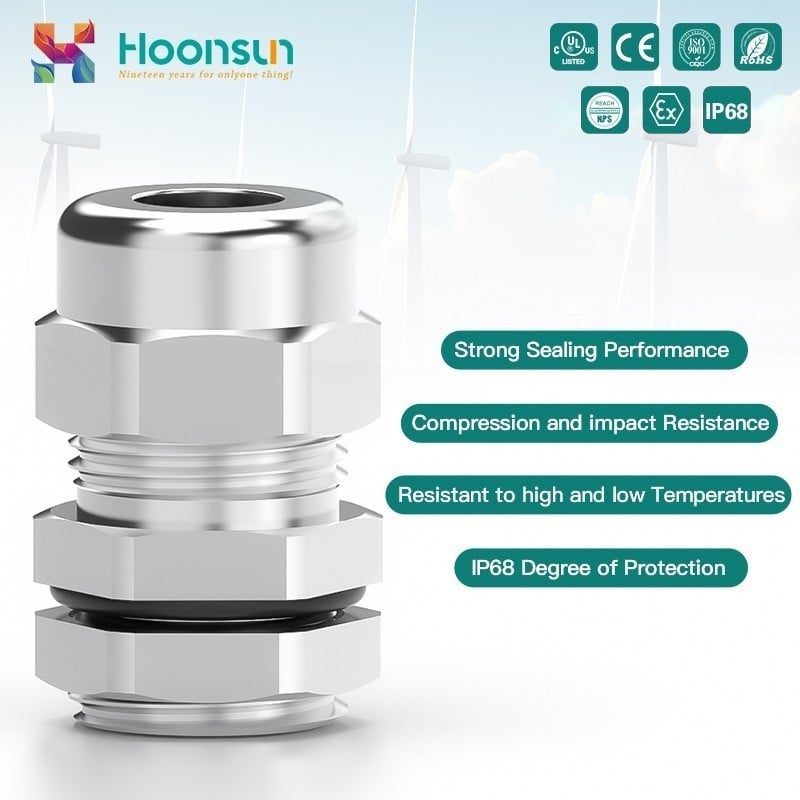
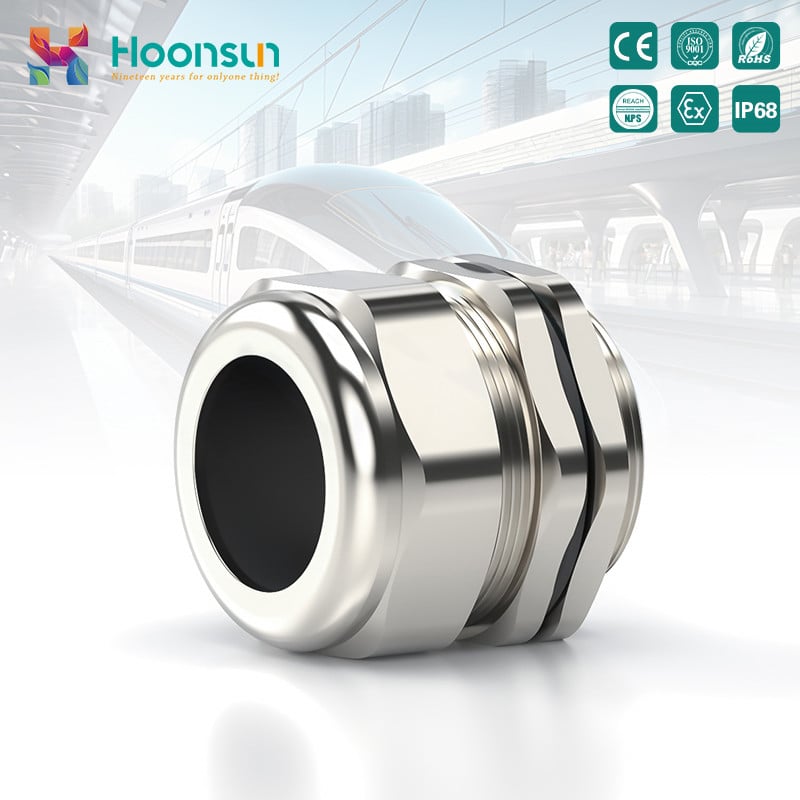
In hazardous areas, the material of the cable gland is just as important as its certification. Material choice impacts the "Ex d" (Flameproof) or "Ex e" (Increased Safety) properties. Nickel-plated brass is the industry standard for most oil and gas applications due to its spark-resistant properties and mechanical strength. For highly corrosive environments, such as offshore platforms or chemical plants, Stainless Steel 316L is the preferred choice to ensure the gland does not degrade and lose its protective capabilities over time.
Hoonsun also offers specialized explosion-proof nylon (plastic) cable glands for specific "Ex e" and "Ex i" (Intrinsic Safety) applications where weight or chemical compatibility is a concern. These are manufactured using high-grade anti-static materials to prevent the buildup of static electricity, which itself can be an ignition source. Our 18 years of manufacturing experience have allowed us to master the precision machining required for explosion-proof threads, ensuring that the flame path in an "Ex d" gland is exactly as specified by the safety standards.
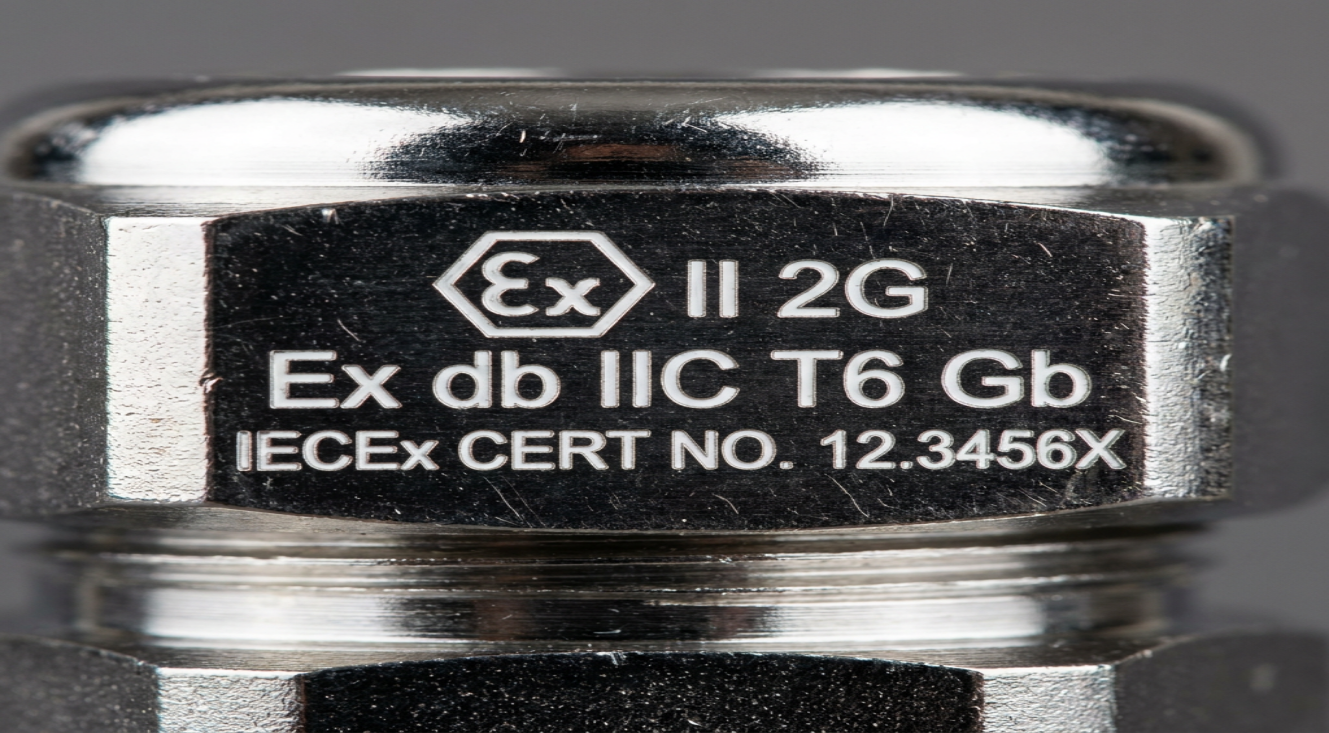
Reading an Ex label is a critical skill for any safety inspector or procurement officer. A typical Hoonsun explosion-proof cable gland will have a string of codes stamped onto its body. For example: Ex db IIC Gb / Ex eb IIC Gb.
Furthermore, the temperature class (e.g., T6) indicates the maximum surface temperature the gland will reach under fault conditions. In an environment with a gas that ignites at 100°C, using a T6-rated gland (max 85°C) is essential. Hoonsun provides detailed datasheets for every certified product, helping our clients match the specific Ex marking to their facility’s Safety Data Sheets (SDS). Correctly interpreting these markings is the only way to ensure that the equipment is fit for its intended purpose.
|
Expert Tip |
|
Expert Tip from Hoonsun’s Compliance Officer: Always verify the validity of the certificates. Both ATEX and IECEx certificates can be checked online via the official databases. For IECEx, use the "IECEx Online Certificate System." For ATEX, refer to the Notified Body’s website. At Hoonsun, we provide QR codes on our packaging that link directly to our latest certificates, ensuring 100% transparency for site inspectors and auditors. |
When purchasing explosion-proof cable glands for international projects, follow these best practices to mitigate risk:
By following these steps, procurement managers can move beyond "buying a part" to "securing a system," ensuring that their hazardous area installations are compliant, safe, and durable.
The choice between ATEX and IECEx often depends on where the final equipment will be installed, but the goal remains the same: preventing a catastrophic explosion. While the administrative pathways differ, both certifications represent a commitment to the highest levels of industrial safety. As a leading Chinese manufacturer with a global perspective, Hoonsun (Zhejiang Hongxiang Connector Co., Ltd.) is proud to provide the engineering excellence and certified reliability that the hazardous area industry demands. With our high-volume capacity and rigorous testing protocols, we are your trusted partner for explosion-proof cable management solutions.
Need certified explosion-proof cable glands for your Zone 1 or Zone 2 project?
View our full ATEX and IECEx certified range at: www.hoonsuncg.com
Request a technical consultation or a bulk quote today: [email protected]
Contact Hoonsun | [email protected] | www.hoonsuncg.com | Founded 2006 | ISO9001 | IATF16949 | CE | UL | ATEX | IECEx
 Hot News
2026-11-20
2026-11-17
2026-11-11
2026-11-02
2026-10-28
2026-10-22

Copyright © Zhejiang Hongxiang Connector Co., Ltd. All Rights Reserved - Privacy Policy
 EN