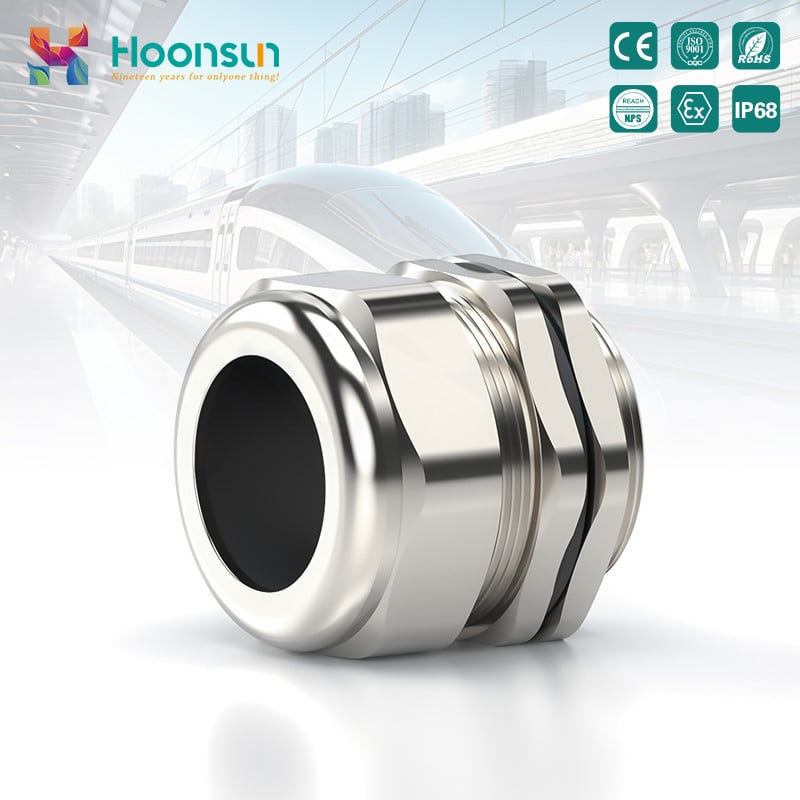
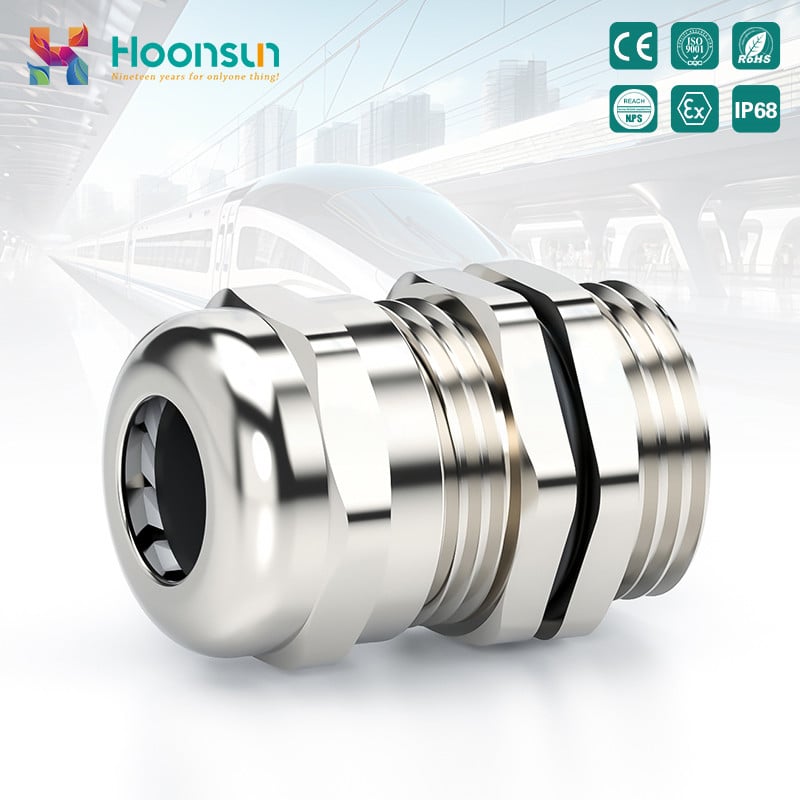
Walk into any industrial electrical project meeting and you will hear the phrase "make it IP68" used as a default catch-all for waterproofing. But IP68 is not always right — and for some applications, it is not enough. Specifying the wrong IP rating results in either wasted cost (over-specifying for dry indoor panels) or field failures and warranty claims (under-specifying for wash-down or immersion environments).
This guide cuts through the confusion. We explain exactly what IEC 60529 test conditions sit behind each IP code, show you which industries and installation zones map to which rating, and give you the decision matrix to specify correctly every time. Hoonsun manufactures cable glands across all three IP classes in brass, stainless steel, and nylon for B2B OEM and distribution customers worldwide.
The IP (Ingress Protection) rating defined by IEC 60529 consists of two digits: the first describes protection against solid particles (dust), the second describes protection against water. For cable glands, the relevant digit is the second:
|
Second Digit |
Protection Against Water |
IEC 60529 Test Condition |
|
IP 4X |
Splash from any direction |
Water splashing against enclosure from any direction |
|
IP 5X |
Water jets |
6.3mm nozzle, 12.5 L/min, from any direction, 1 min/m² |
|
IP 6X |
Powerful water jets (IP66) |
12.5mm nozzle, 100 L/min, from any direction, 1 min/m² |
|
IP 67 |
Temporary immersion |
1 m depth for 30 minutes |
|
IP 68 |
Continuous immersion |
Depth and duration as agreed with manufacturer |
|
IP 69K |
High-pressure steam/hot water |
80°C, 80–100 bar, 8–10 L/min, 0.1–0.15 m distance |
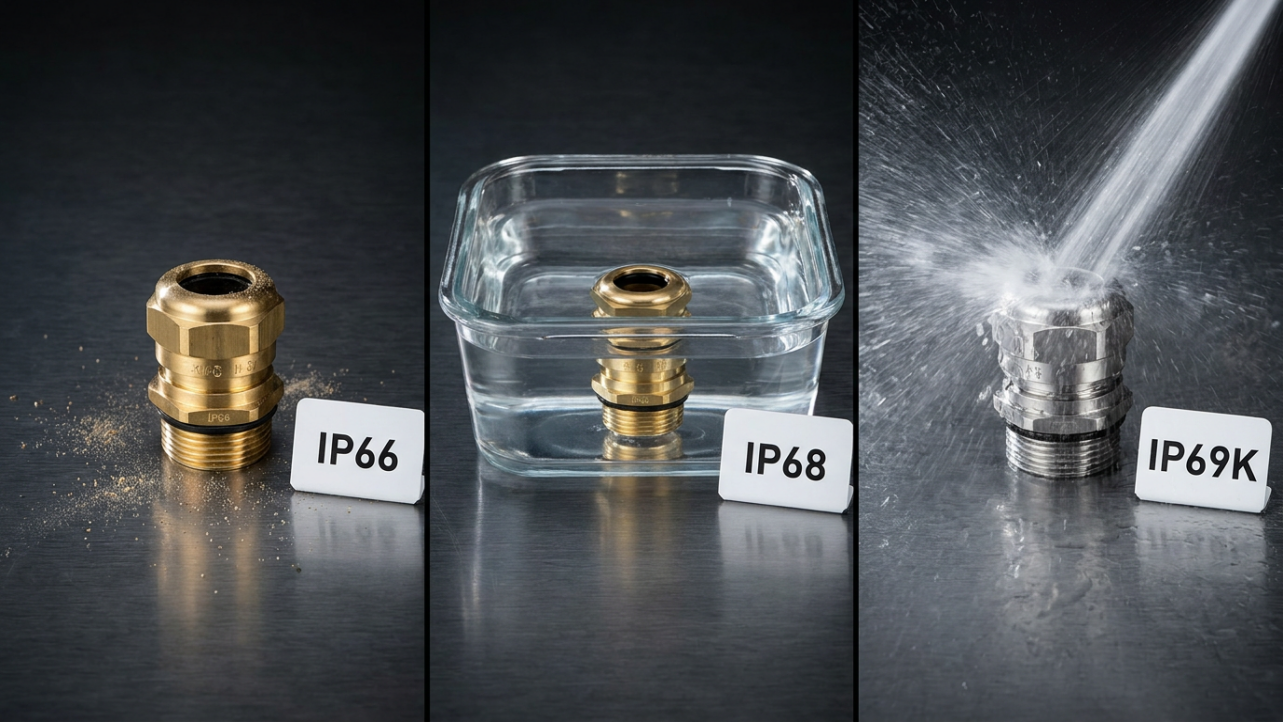
IP66 protects against powerful water jets from any direction — the equivalent of heavy rain driven by wind, or hose-down cleaning with a standard garden nozzle. For most outdoor electrical enclosures, street lighting panels, building rooftop installations, and sheltered industrial applications, IP66 is the correct and sufficient rating. Specifying IP68 for these applications adds cost with no practical benefit.
IP68 confirms the gland can withstand continuous submersion under conditions agreed between manufacturer and customer — IEC 60529 does not set a fixed depth or time for IP68. The most common industry convention is 1 metre for 30 minutes, but marine, offshore, and underground applications may require 3m/4h or deeper. Always ask your supplier to state the specific test condition, not just the IP68 claim.
IP69K is completely different from IP68 — it is not a "higher" version of IP68. An IP68-rated gland may fail an IP69K test entirely. IP69K is defined by ISO 20653 (originally DIN 40050-9) and requires the gland to withstand close-range, high-pressure hot water (80°C, up to 100 bar) used in food-grade CIP cleaning and vehicle wash systems. Food processing, dairy, pharmaceutical, and specialty chemical plant applications require IP69K — not just IP68.
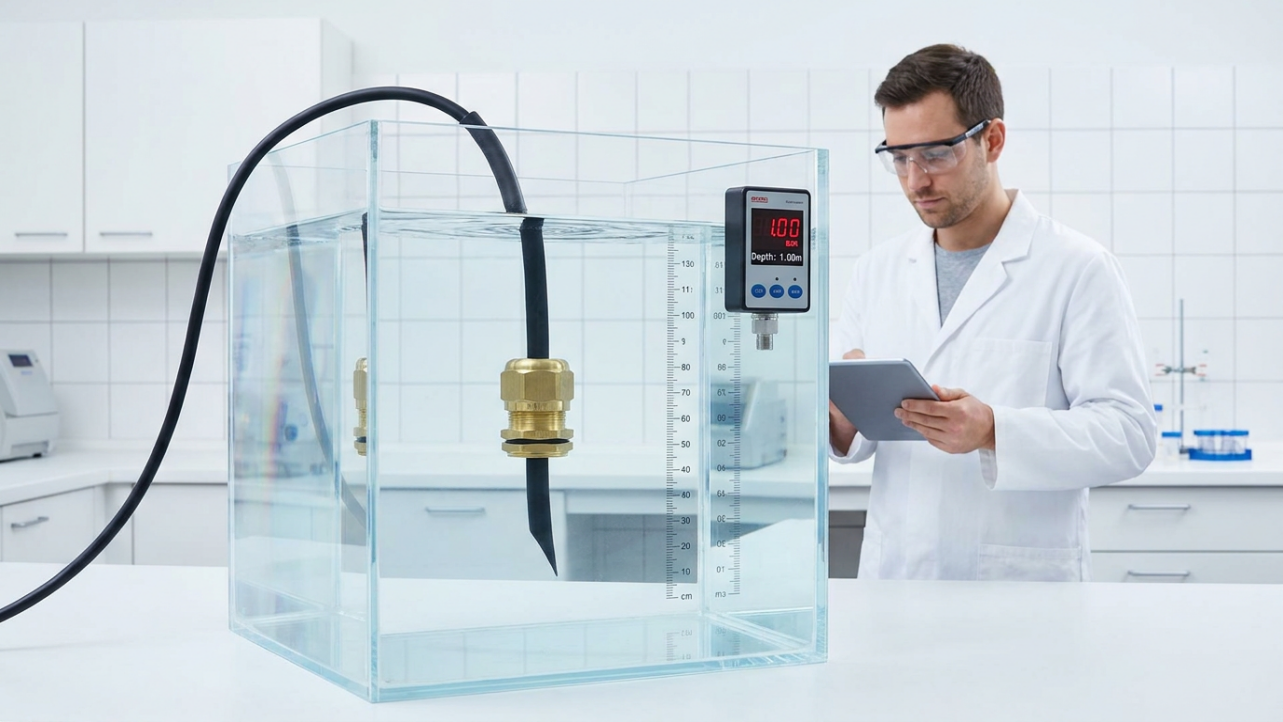
Figure 2 — IP68 submersion test: cable gland sealed at 1 metre depth in laboratory water tank, verifying continuous-immersion protection before batch shipment.
|
Application |
Minimum IP |
Recommended Material |
Notes |
|
Indoor dry panel |
IP54 |
Nylon PA66 |
Standard LV switchboard |
|
Outdoor exposed enclosure |
IP66 |
Nylon or Brass |
Wind-driven rain environment |
|
Underground junction box |
IP68 (1m/30min) |
Brass or SS 316L |
Confirm test depth with supplier |
|
Marine topside |
IP68 (3m/4h) |
316L Stainless Steel |
Wave-wash zones |
|
Food/pharma CIP wash-down |
IP66 + IP69K |
316L SS + Silicone seal |
Both ratings required |
|
Chemical immersion pit |
IP68 + chemical resistance |
316L SS + FKM seal |
Verify chemical compatibility |
|
Ex Zone 1 (gas) |
IP66 minimum |
Brass Ex d/Ex e certified |
IP rating from Ex certificate |
Full range: IP54 to IP69K across nylon, brass, and stainless steel in M-metric, NPT, and PG threads.
 Hot News
2026-10-22
2026-10-22
2026-10-13
2026-10-10
2026-09-30
2026-09-24

Copyright © Zhejiang Hongxiang Connector Co., Ltd. All Rights Reserved - Privacy Policy
 EN
EN