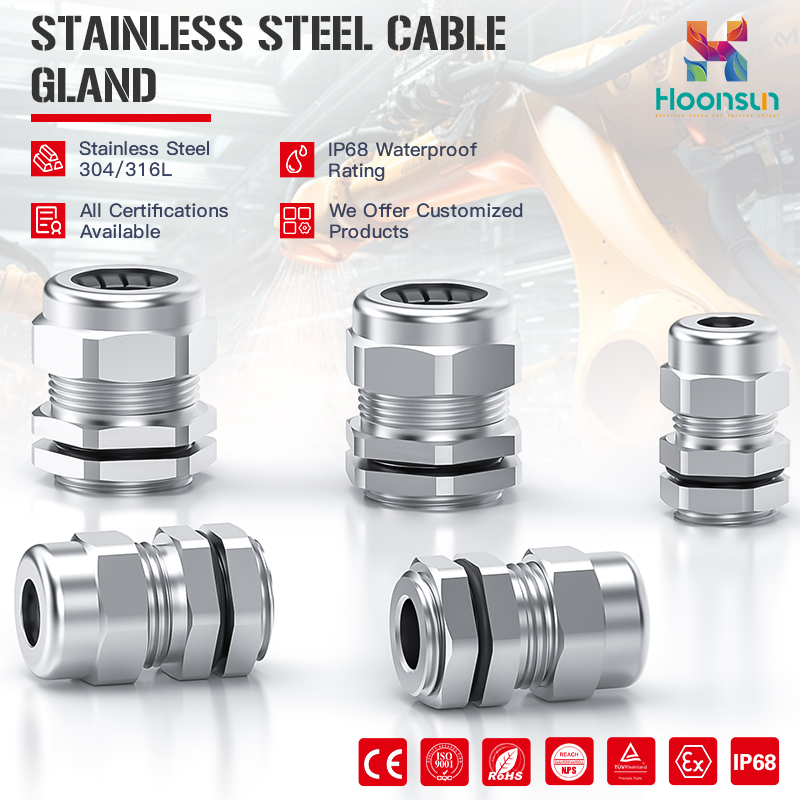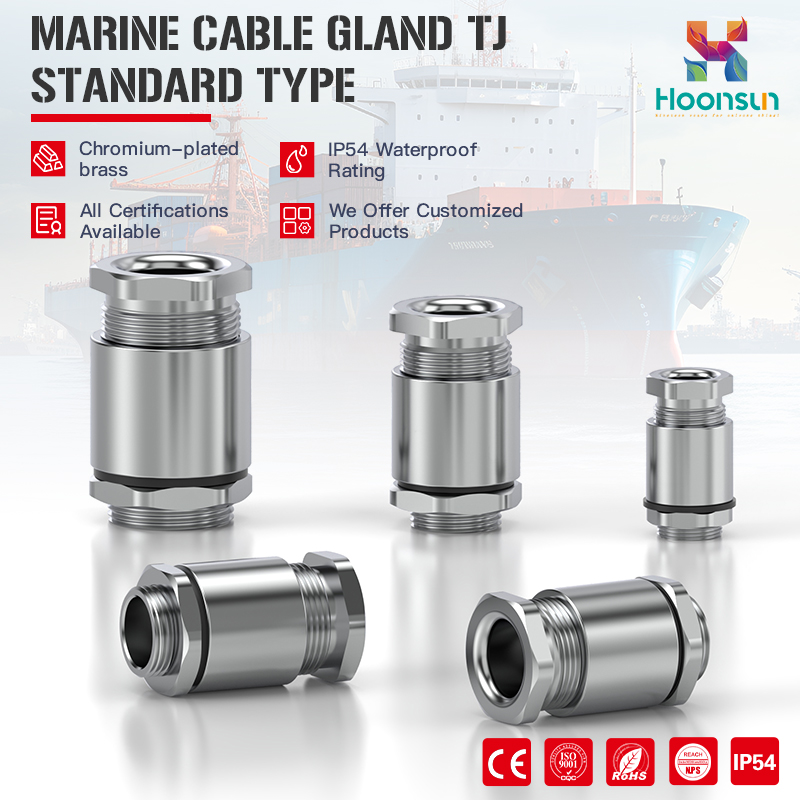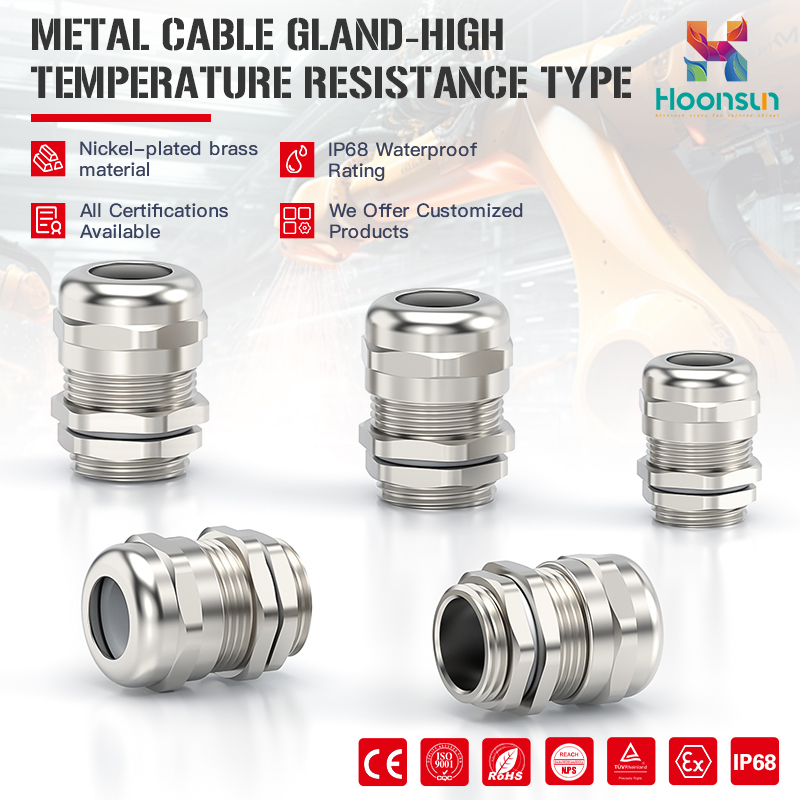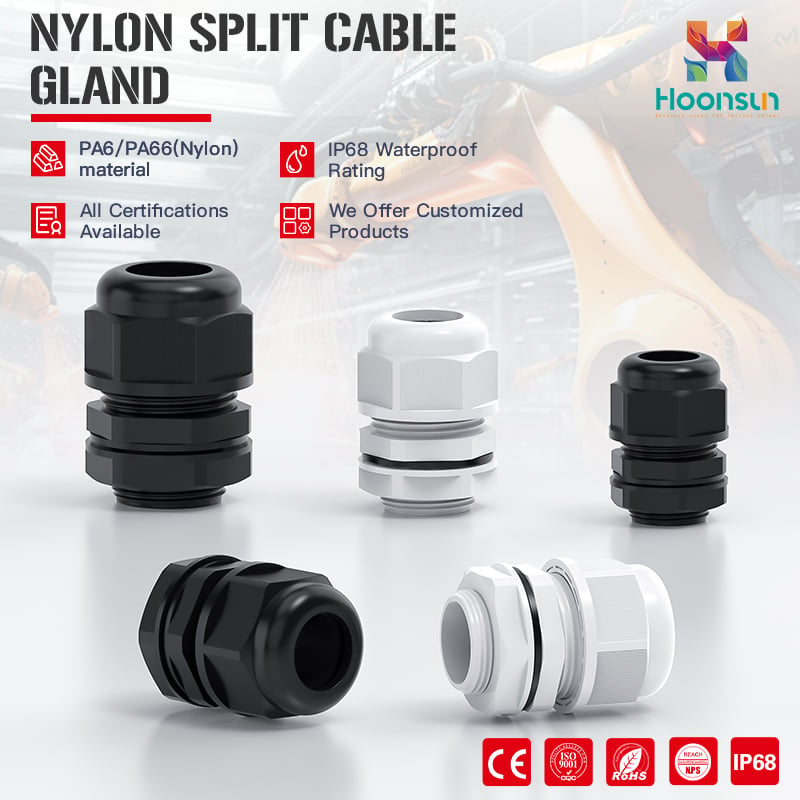
Automated CNC machining lines at Hoonsun's 10,000m² Yueqing production facility, manufacturing nickel-plated brass cable glands.
In the commodity world of brass cable glands, the difference between a reliable OEM partner and a disruptive supplier often comes down to factors invisible in a product photo: plating bath chemistry, CNC tooling maintenance cycles, incoming raw material QC, and the statistical process control discipline that ensures batch-to-batch consistency. For procurement engineers placing six-figure annual orders, selecting the wrong manufacturer means warranty claims, project delays, and the reputational cost of field failures.
This guide provides a structured framework for evaluating brass cable gland manufacturers — covering factory audit criteria, key process indicators, certification verification, and the commercial terms that protect your supply chain. Hoonsun (Zhejiang Hongxiang Connector Co., Ltd.) has served OEM and trading customers since 2006 with an annual output exceeding 80 million cable glands across nine product lines.
The mechanical strength and corrosion resistance of a brass cable gland starts with alloy selection. Standard cable gland bodies use CuZn39Pb2 (CW612N) or CuZn36Pb2As (CW602N) — the latter is dezincification-resistant (DZR), critical for wet or marine-adjacent environments. Always request the material certificate (EN 10204 3.1 or 3.2) and verify the copper content (min. 60%) and lead content (≤2% for standard, <0.1% for RoHS-critical projects).
Cable gland threads (M-metric, PG, NPT) are precision features with tolerance requirements of ±0.02mm on pitch diameter. Manufacturers relying on worn tooling or manual lathes cannot maintain these tolerances at scale. Look for: ISO-certified CNC turning centers (Fanuc/Mitsubishi controller), statistical process control (SPC) records, and tool-change logs. Hoonsun operates 120+ CNC machining centers with automated tool-life monitoring.
Nickel plating provides both corrosion protection and the aesthetic finish B2B buyers specify. Critical parameters: plating thickness (standard 5–8 μm, enhanced 12–15 μm for harsh environments), adhesion (cross-hatch test per ISO 2409), and salt-spray resistance (minimum 96 hours per ISO 9227 for standard grade, 200+ hours for marine-adjacent applications). Request batch salt-spray test reports — not just product certifications.
IP68 performance depends entirely on the sealing element. Standard glands use NBR (nitrile rubber) O-rings rated −40°C to +100°C. For high-temperature or chemical environments, EPDM (−50°C to +150°C) or FKM/Viton (−20°C to +200°C, oil-resistant) is required. Verify sealing ring hardness (Shore A 60–70°), compression set (<25% after 72h at 100°C per ISO 815), and the manufacturer's IP68 test procedure (IEC 60529: 1m depth for 30 min minimum).
|
Audit Criterion |
What to Look For |
Red Flag |
|
Raw material QC |
Incoming material certs (EN 10204 3.1) |
No traceability to heat number |
|
CNC precision |
SPC charts, tooling change logs |
Single-operator manual lathes only |
|
Plating quality |
Salt-spray test reports by batch |
Only annual product cert, no batch data |
|
IP68 testing |
In-house water submersion test bench |
Outsourced 100% — no internal capability |
|
Certifications |
ISO 9001 current certificate + IATF if claimed |
Expired or uncertified |
|
Capacity evidence |
Production scheduling system, warehouse stock |
Verbal claim only |
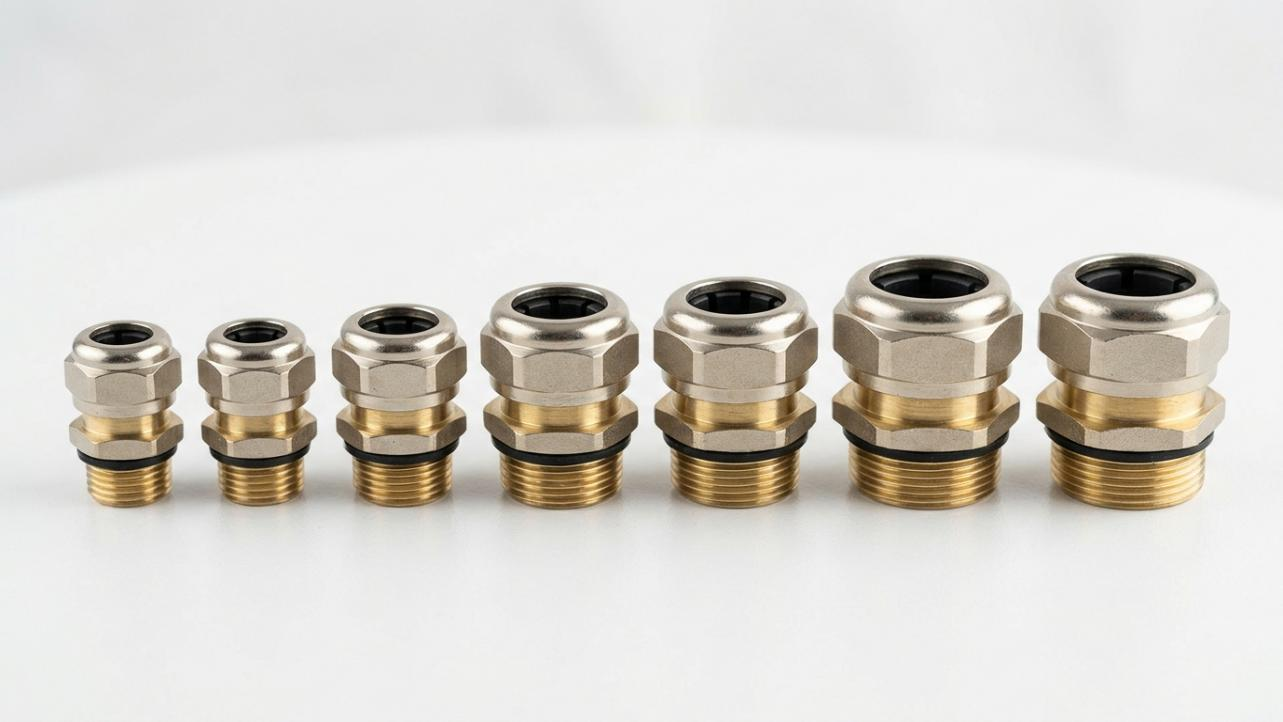
Nickel-plated brass cable glands in M20, M25, and M32 sizes — standard production grades at Hoonsun, available for OEM with custom thread and packaging.
 Hot News
2026-10-13
2026-10-10
2026-09-30
2026-09-24
2026-09-21
2026-09-16

Copyright © Zhejiang Hongxiang Connector Co., Ltd. All Rights Reserved - Privacy Policy
 EN