All Categories

Blogs

 >  News >  Blogs

Single Compression vs. Double Compression Cable Glands: Construction, IP Ratings & Selection Guide (2026)

Sep 16, 2026


Cable Glands

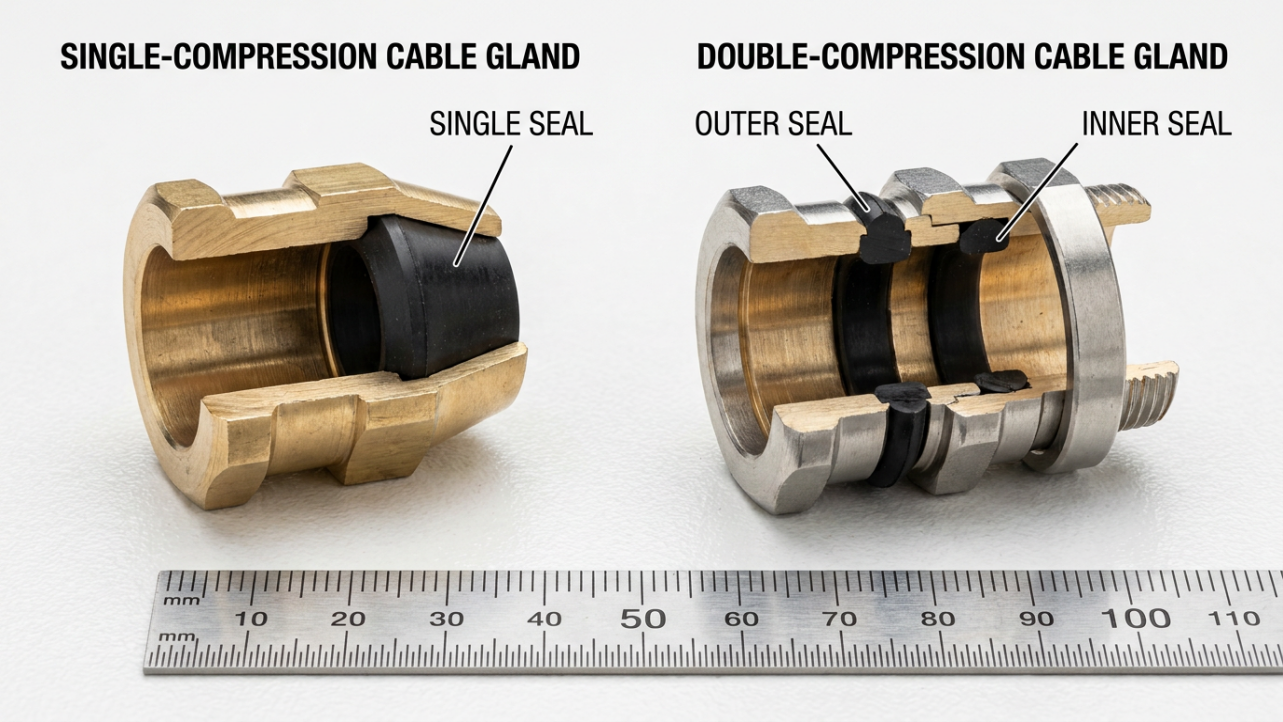
 Cutaway comparison: single-compression gland (left, one sealing cone) vs double-compression gland (right, two independent sealing elements).

Introduction: The Compression Design Determines Your IP Protection

When a B2B buyer specifies an IP68 cable gland, what they are really specifying is a sealing system that must maintain its integrity under continuous water pressure at depth. The number and design of the sealing elements — single or double compression — directly determines whether the gland achieves and maintains that IP rating under real-world installation variables: cable jacket tolerance variation, temperature cycling, and vibration.

This guide explains the construction differences between single-compression and double-compression cable glands, the IP rating implications of each design, and the practical application rules that should drive your specification. Hoonsun manufactures both types in brass and stainless steel for standard and armored cable applications.


Section 1 — Construction: How Each Type Works

Single Compression Design

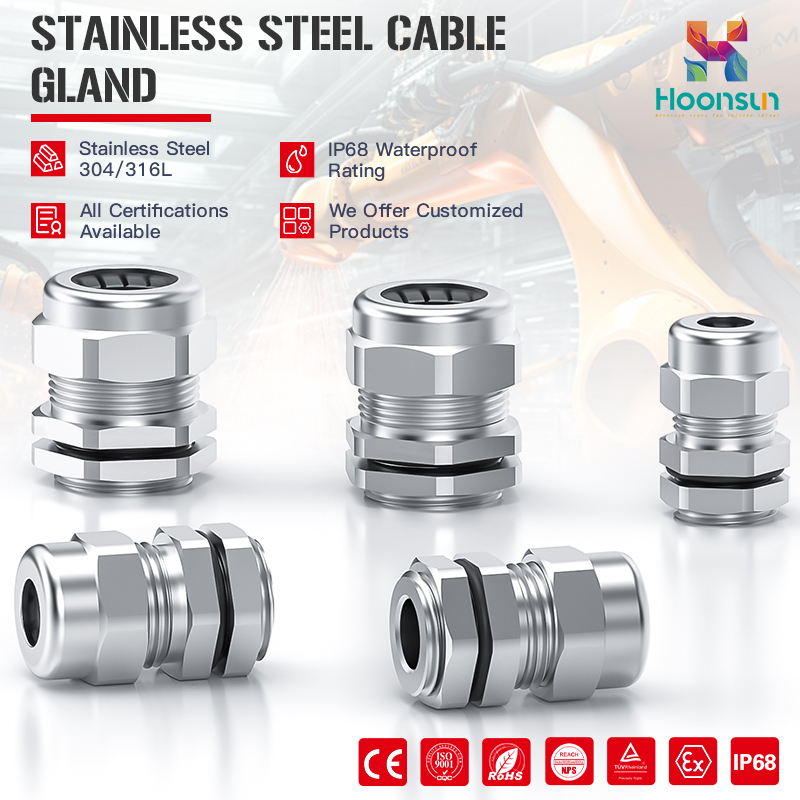
A single-compression cable gland uses one sealing element — a rubber cone or ring — compressed by the gland nut against the cable outer jacket. As the nut is tightened, the cone deforms radially inward, gripping the cable and forming a water seal at the cable/gland interface. The enclosure entry is sealed by the gland body O-ring or thread sealant. Result: two sealing zones — cable interface and enclosure aperture — with a single compression action.

Double Compression Design

A double-compression gland uses two independent sealing elements: a front cone that seals against the cable outer jacket (equivalent to the single-compression design), plus a second inner seal that compresses around the cable inner jacket beneath an armor clamp — critical for armored cables where the outer jacket is removed to expose the armor. The armor clamp additionally provides mechanical protection by clamping the steel wire or tape armor. Result: three protection zones — armor clamp, inner jacket seal, and outer enclosure seal.


Section 2 — IP Rating Comparison

Design

Cable Type

Typical IP Rating

Sealing Zones

Armor Clamp

Single Compression

Unarmored flexible

IP54–IP68

2 (cable + enclosure)

No

Double Compression

Unarmored (close-fit)

IP68

3 (dual cable + enclosure)

No

Double Compression

Armored SWA/AWA/STA

IP66–IP68

3 (armor + inner + outer)

Yes

Three-Part Armored

SWA heavy armored cable

IP68

4 zones + earth continuity

Yes + earth tag


Cable Glands

Double-compression gland installation on offshore armored cable: engineer tightening the M40 gland on a weatherproof enclosure with salt-mist atmosphere.

Section 3 — Which Type for Your Application?

Use Single Compression When:

  • Cable is unarmored (NYY, H07RN-F, SY, CY flexible cable)
  • Cable OD variation is within the gland sealing range (measure cable OD at 3 points before ordering)
  • Installation is in a stable, low-vibration environment (indoor panels, fixed equipment)
  • IP54 to IP67 is the requirement — single-compression designs are cost-effective in this range

Use Double Compression When:

  • Cable is armored: Steel Wire Armored (SWA), Aluminum Wire Armored (AWA), Steel Tape Armored (STA)
  • Marine, offshore, or underground installation where armor continuity and IP68 are both mandatory
  • High-vibration environments (pump stations, compressor rooms, ship engine rooms) where single-compression may loosen
  • Cable OD is at the edge of the sealing range — double compression provides better tolerance for OD variation


Section 4 — Common Specification Mistakes

  • Using single-compression on armored cable: The armor wires will prevent the cone from sealing against the inner jacket, causing immediate IP failure. Always use double-compression or three-part glands for armored cables.
  • Wrong compression nut torque: Under-torquing leaves the sealing cone partially compressed — IP rating is not achieved. Over-torquing cracks the cone. Always use a torque wrench to the manufacturer-specified value.
  • Cable OD outside stated sealing range: A cable at the extreme low end of the gland sealing range will not achieve reliable IP68. Check cable OD tolerance and select the next-smaller gland size if in doubt.
  • Ignoring inner jacket diameter for double-compression armored glands: The inner seal must match the inner jacket OD, not the overall cable OD. Specify both measurements when ordering armored cable glands.


Section 5 — Hoonsun Compression Gland Range

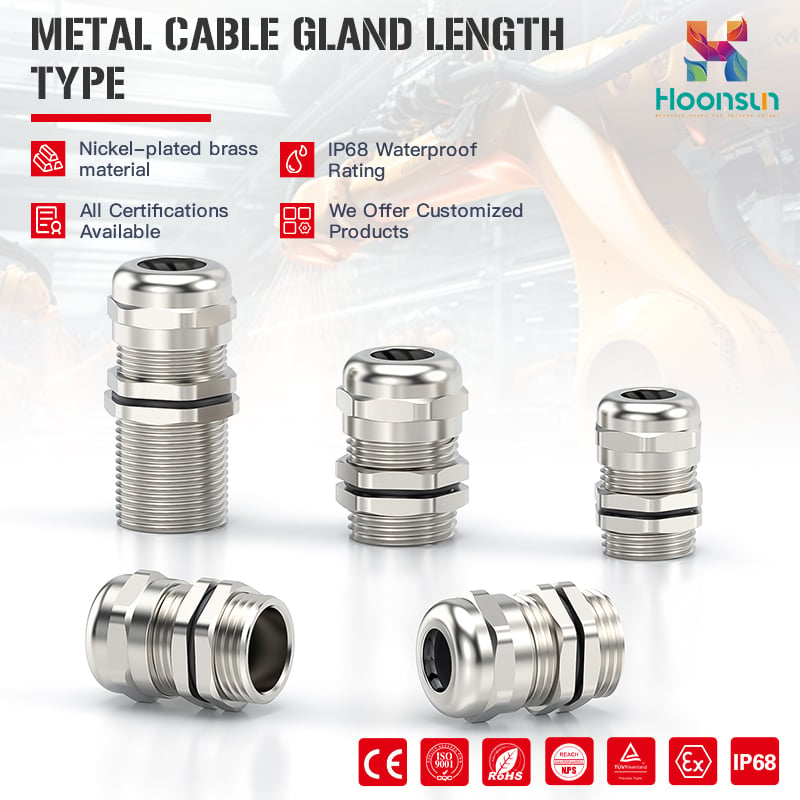
  • Single compression: M12–M63, PG7–PG48, NPT ½"–2", brass and nylon, IP54–IP68
  • Double compression armored: M20–M75, cable OD 6–52mm, SWA/AWA compatible, IP66/IP68
  • Three-part armored: M20–M63 with earth tag, IP68, LV and MV cable compatible
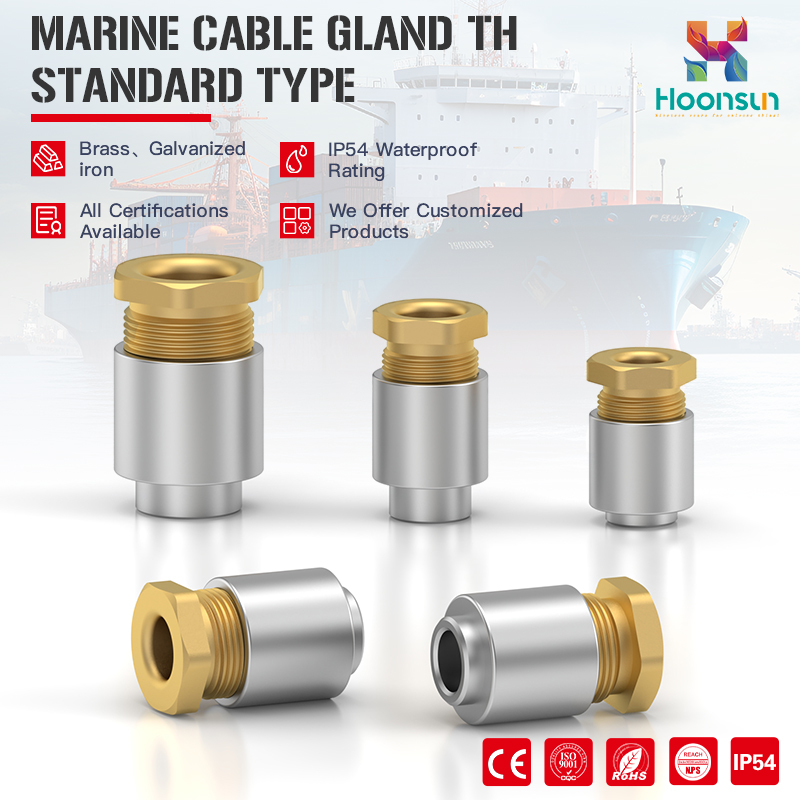
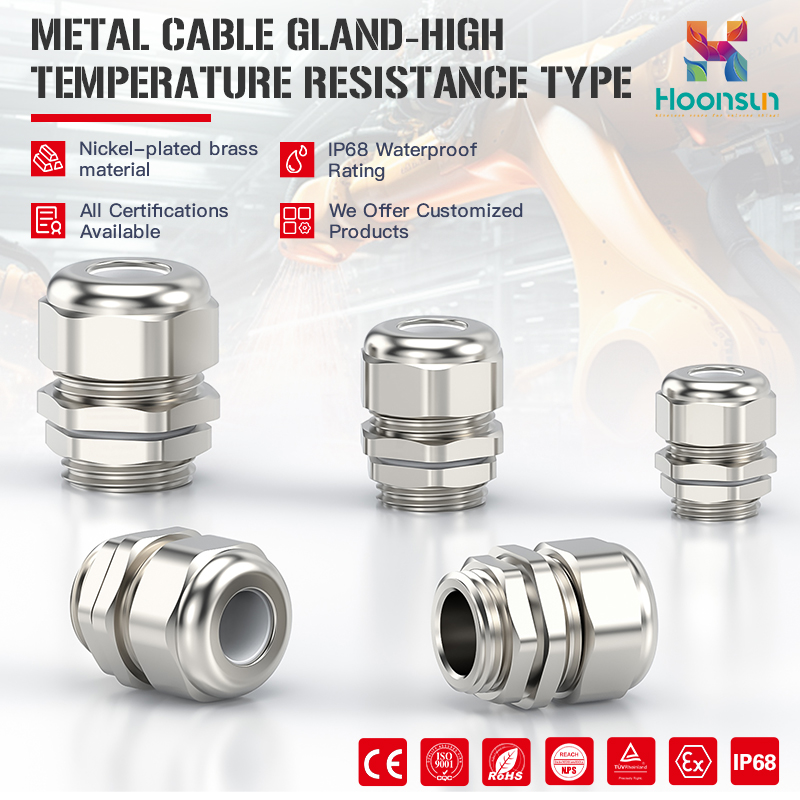
  • Materials: Nickel-plated brass (standard), 316L stainless (marine/food), zinc alloy (economy)
  • OEM service: Custom armor clamp profiles, special sealing ring materials, project documentation package


Get a Free Quote

Our representative will contact you soon.
Email
Mobile/WhatsApp
Name
Company Name
Message
0/1000

Copyright © Zhejiang Hongxiang Connector Co., Ltd. All Rights Reserved  -  Privacy Policy