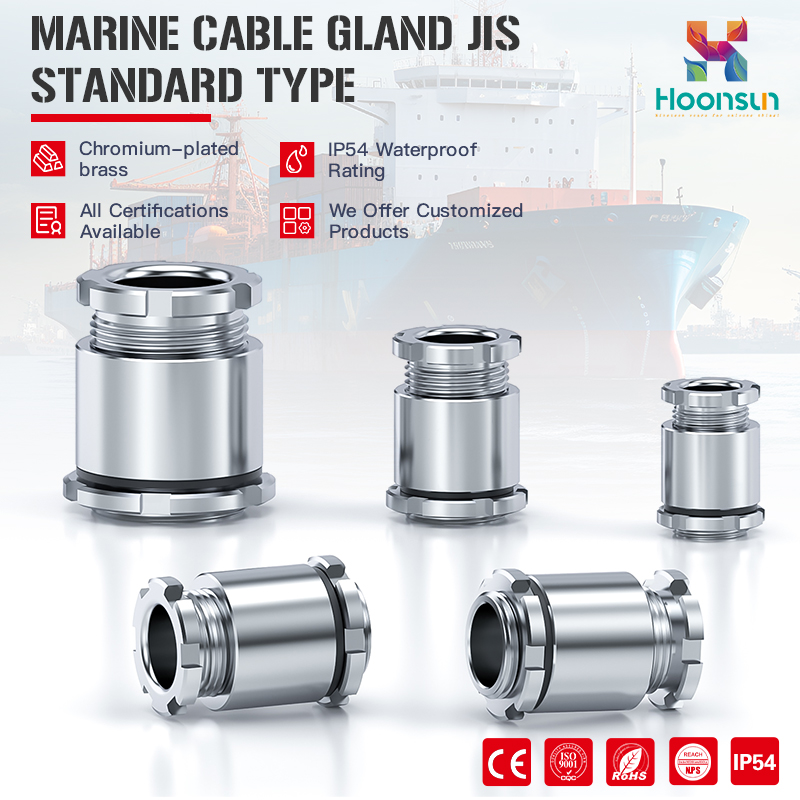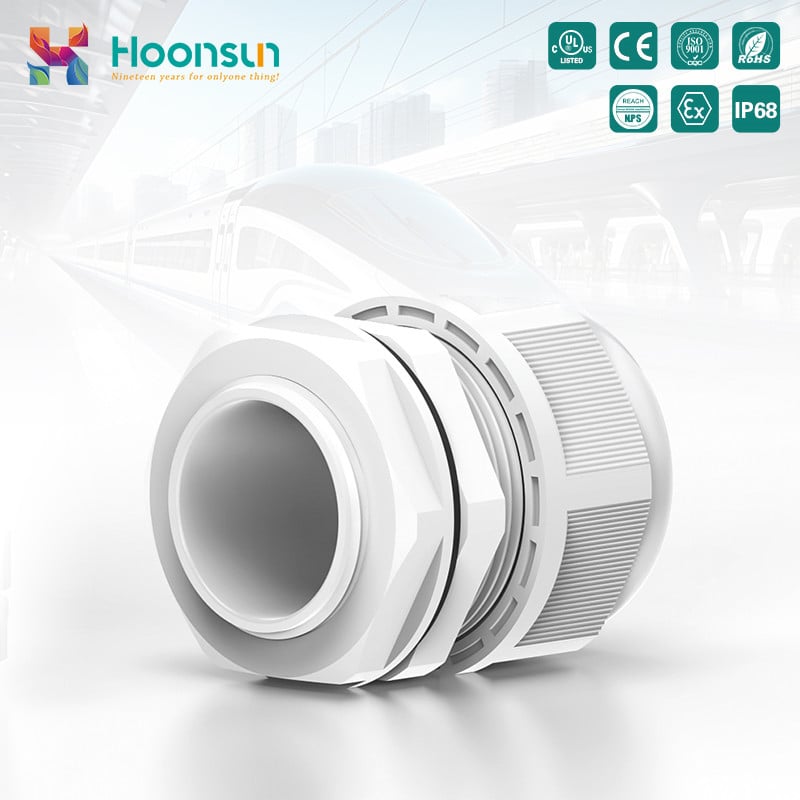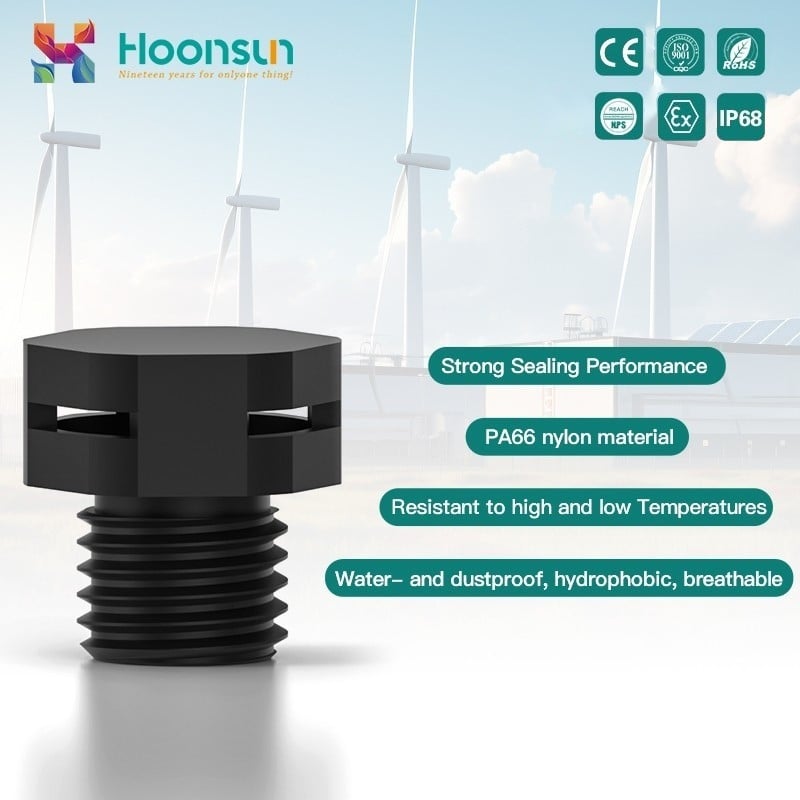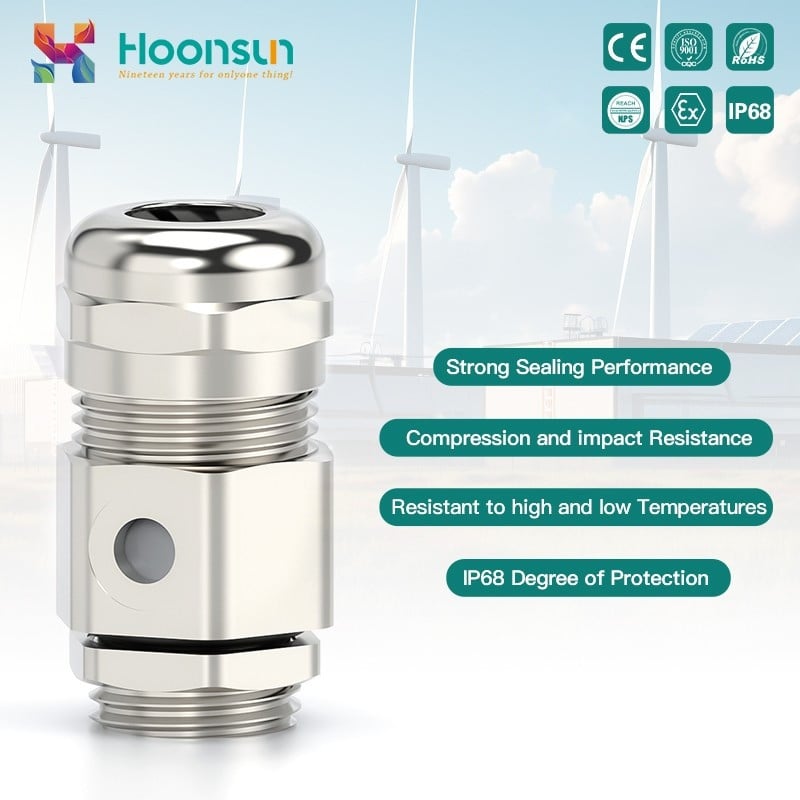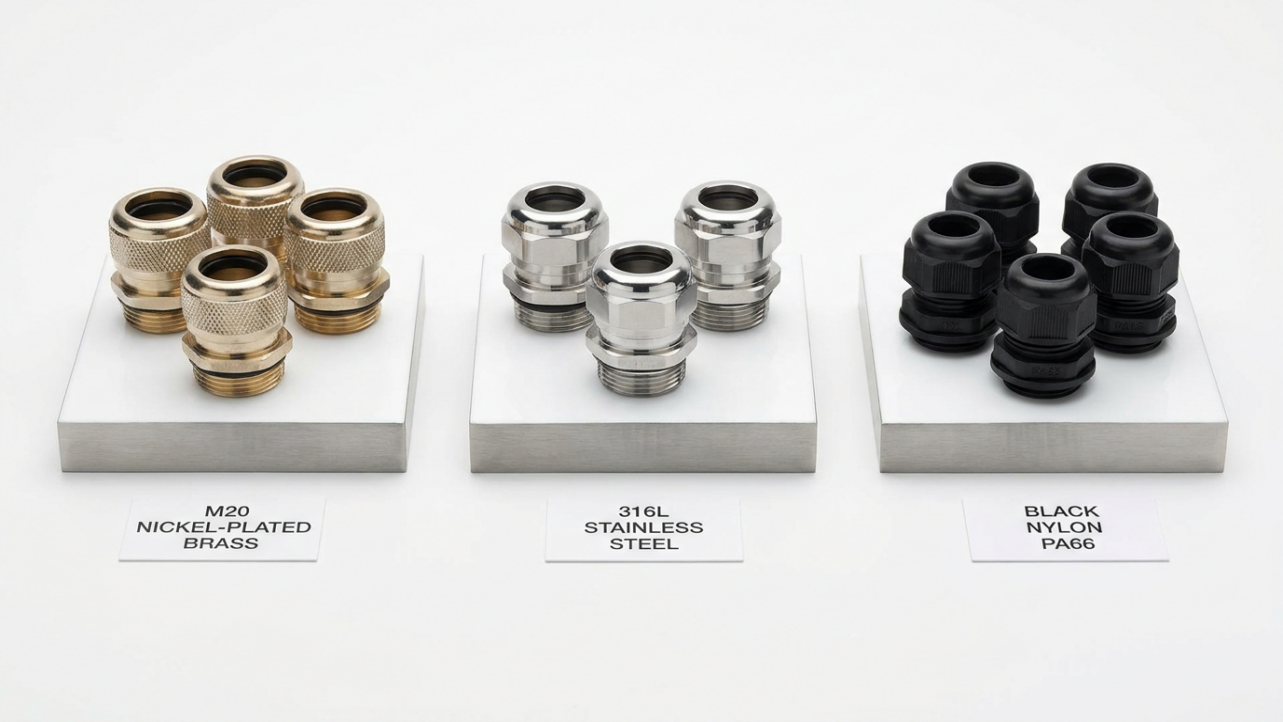
Three material families side by side: nickel-plated brass (left), 316L stainless steel (center), and black nylon PA66 (right) — the same M20 size for direct comparison.
Procurement teams under cost pressure often default to nylon because the unit price is lowest, or specify stainless steel "to be safe." Both decisions are sometimes right and often wasteful. The correct approach is to match cable gland material to the specific combination of chemical environment, mechanical stress, temperature range, EMC requirements, and regulatory compliance — and then select the most cost-effective material that meets all criteria.
This guide provides a systematic, data-driven comparison of the three dominant cable gland materials — nickel-plated brass, 316L austenitic stainless steel, and glass-fibre reinforced nylon PA66 — across the eight dimensions that matter most to industrial B2B buyers. Hoonsun manufactures all three in parallel production lines with in-house quality control and export documentation.
|
Performance Criterion |
Nickel-Plated Brass |
316L Stainless Steel |
|
|
Cost Index |
2–3× |
5–7× |
1× |
|
Weight |
Medium |
Heavy |
Very Light |
|
Tensile Strength (body) |
High (≥330 MPa) |
Very High (≥480 MPa) |
Moderate (≥80 MPa) |
|
Max Continuous Temp |
120°C |
150°C |
100°C |
|
Saltwater Corrosion |
Moderate (plated) |
Excellent (PREN 24.5) |
Not applicable |
|
Chemical Resistance |
Moderate |
High |
Moderate |
|
EMC Shielding |
Yes (bonded) |
Yes (bonded) |
None |
|
IP68 Capability |
Standard |
Standard |
Standard |
|
IP69K Capability |
With FKM seal |
With Silicone seal |
Limited |
|
Food-Grade Compliance |
No (nickel) |
Yes (316L + silicone) |
With FDA-grade seal |
|
ATEX / Ex Certification |
Yes (brass Ex d/e) |
Yes (SS Ex d/e) |
Group III (dust) only |
|
RoHS Compliant |
Yes |
Yes |
Yes |
Nickel-plated brass (CuZn39Pb2 / CW612N or DZR CW602N) accounts for the majority of industrial cable gland applications globally. Its combination of machinability, mechanical strength, good corrosion resistance, and EMC shielding capability at an intermediate price point makes it the default material for most industrial panels, automation equipment, and general-purpose electrical installations.
316L stainless steel is the mandatory specification for three environments: marine offshore (PREN > 23 required), food and beverage processing (hygienic design requirements, CIP compatibility), and chemical manufacturing (aggressive solvents and acids). Its 2–3% molybdenum content raises corrosion resistance to a level that no brass alloy can match in saltwater or sanitiser environments.
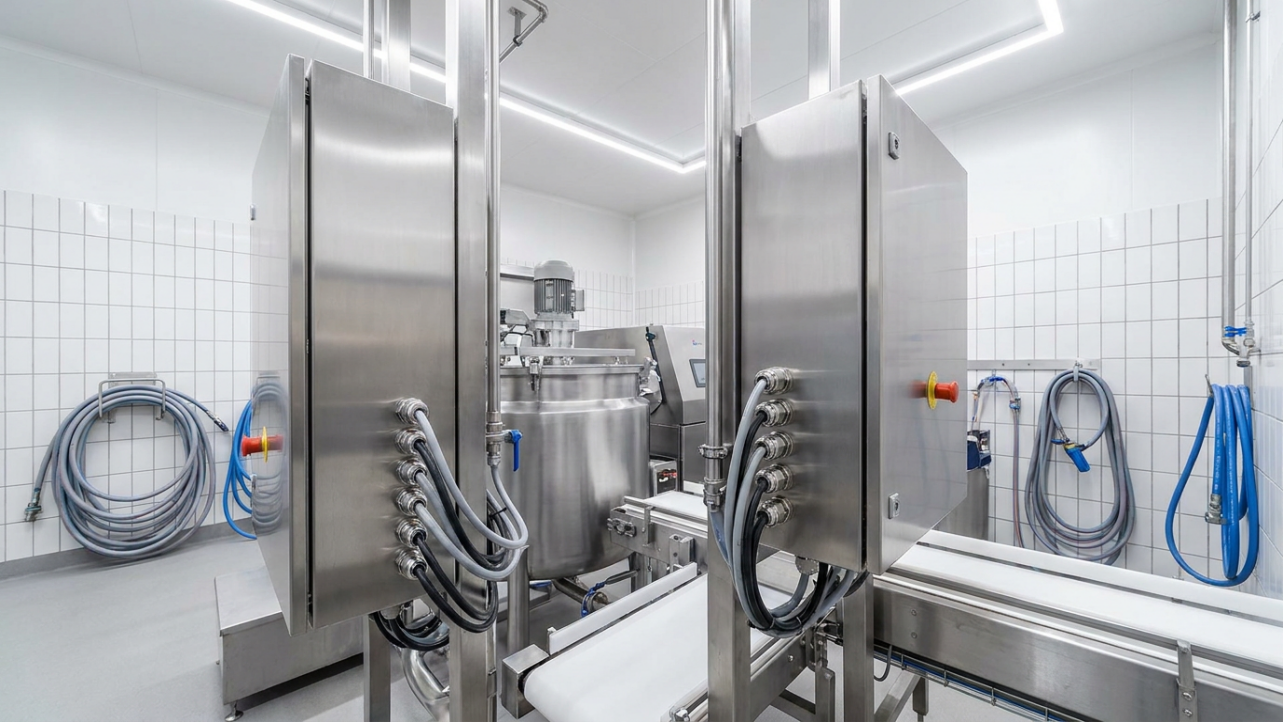
316L stainless steel cable glands in a food-grade processing facility: hygienic design, CIP-compatible, withstanding daily hot water washdown.
Glass-fibre reinforced PA66 nylon provides a non-metallic, lightweight, halogen-free cable gland solution where EMC shielding is not required and the environment does not demand the mechanical strength of metal. Its combination of low cost, weight saving, and natural corrosion immunity (there is no metal to corrode) makes it the standard for commercial buildings, telecom, HVAC controls, and light industrial panels.
|
Industry / Application |
Recommended Material |
Key Reason |
|
Commercial buildings |
Nylon PA66 |
Cost, weight, no EMC requirement |
|
Industrial automation / CNC |
Nickel-Plated Brass |
EMC shielding, strength, vibration resistance |
|
Marine / Offshore |
316L Stainless Steel |
Chloride corrosion resistance (PREN 24.5) |
|
Food / Pharma / Dairy |
316L SS + Silicone seal |
Hygienic design, IP69K, CIP wash-down |
|
Chemical plant |
316L SS or Brass (by chemical) |
Chemical resistance chart consultation |
|
ATEX Zone 1/2 |
Brass or 316L SS (Ex certified) |
Ex d/Ex e certification required |
|
Outdoor solar/PV |
UV-stabilized Nylon |
Cost, UV stability, halogen-free |
 Hot News
2026-10-22
2026-10-22
2026-10-13
2026-10-10
2026-09-30
2026-09-24

Copyright © Zhejiang Hongxiang Connector Co., Ltd. All Rights Reserved - Privacy Policy
 EN
EN